
Best Lemon Vibrator Settings for Sensitive Clitoral Tissue
Here's what no one tells you: your clitoris isn't static. It changes. Sensitivity shifts with hormones, medication, stress levels, age, and sometimes just life happening around you. What felt perfect five years ago might feel too intense now. Or the opposite. And that's not something wrong with you. It's just your body evolving.
The good news: once you understand what's shifting, adjusting your lemon vibrator technique becomes straightforward. You don't need a new toy. You need to know how to read your body's signals and dial in the settings that match where you are right now.
Why clitoral sensitivity changes (and it's totally normal)
Your clitoris has somewhere between 8,000 and 16,000 nerve endings. All of that sits right beneath a thin layer of tissue. That tissue responds to hormones. When estrogen and testosterone fluctuate, the clitoris itself can become more or less reactive. This happens during your cycle, after starting or stopping birth control, during perimenopause, postpartum, and as you age generally.
Some people describe this as numbness. Others say it feels raw. Some say pleasure is actually sharper and more concentrated than it used to be. All of these are real, common reports.
Beyond hormones, medications like SSRIs can dampen sensation. Stress tightens your pelvic floor and makes it harder for arousal to build. Dehydration affects tissue plumpness. Even caffeine intake, sleep quality, and how rushed you feel matter.
None of this means you're broken. It means you're paying attention to what your body needs in this moment.
Start with intensity settings, not the highest pattern
Most people reach for their lemon vibrator and immediately go to pattern three or four. That's the instinct. But if your clitoris feels tender, raw, or just more sensitive than usual, that's actually the wrong move.
With the Lemons Sex Toy lemon clitoral vibrator, you have intensity control for a reason. Start at level one. Spend actual time there. Five to ten minutes. I know that sounds slow. Do it anyway.
At level one, the stimulation is gentle enough that you can feel what your clitoris actually wants without being overwhelmed. You're not bracing against the sensation. You're not gripping your pelvic floor in anticipation of something intense. You're just receiving.
Once you're warmed up and aroused at level one, then move to level two. If level two still feels like too much, stay with level one for several sessions. Your sensitivity baseline might shift again in a week or two.
How to find the right pattern for tender tissue
Your lemon vibrator has different patterns, not just intensity levels. If you've got a model with three or more patterns, pattern one is typically a steady, constant vibration. That's where you want to start if your clitoris is sensitive.
Steady vibration is less jarring than pulsing or rhythmic patterns. It lets your nervous system settle. Once you're deeper in arousal, you might switch to a pattern two or three. But in the first phase, steady and gentle wins.
If your clitoris feels raw or post-stimulation sore, skip the patterned settings entirely for a session or two. Stick with continuous vibration on the lowest setting. You're not chasing an orgasm. You're remapping sensation.
Positioning matters when tissue is tender
Direct contact on a sensitive clitoris can feel like too much, even at low intensity. Try positioning your lemon vibrator slightly off to the side of your clitoris rather than directly on it. Many people find the outer edge of the clitoral hood responds beautifully this way.
You can also use your own hand as a buffer. Run the vibrator over your hand, which then contacts your clitoris. It softens the sensation without taking away pleasure.
Or try the indirect approach entirely. Vibrate the inner labia or the base of your clitoris rather than the tip. When sensation is sensitive, your whole vulva lights up with arousal. You don't need direct contact to feel incredible.
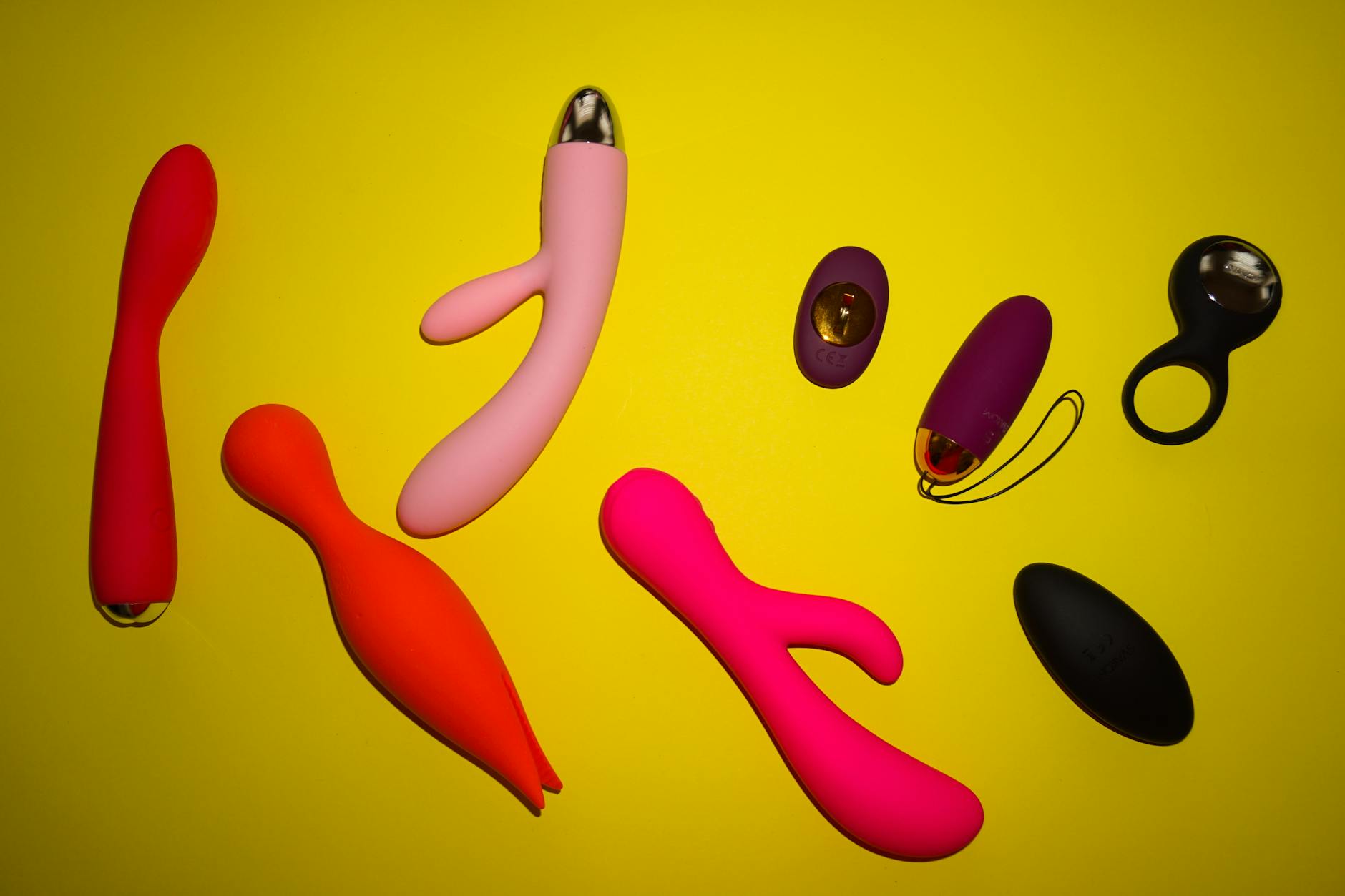
Photo by FounderTips on Pexels
Lubrication changes everything for sensitive tissue
Water-based lube becomes non-negotiable when your clitoris is tender. It reduces friction without changing the vibration quality. Apply lube to both the vibrator and your clitoris before you start.
Reapply halfway through. Sensitivity often means tissue is slightly thinner or drier than usual. Lube addresses both. It's not a band-aid for the problem. It's how you create the environment where low-intensity, gentle stimulation actually works.
Some people find that adding lube also gives them permission to slow down. The friction worry goes away. You can focus on sensation instead of bracing.
When to use your lemon vibrator during your cycle
If you menstruate, pay attention to where you are in your cycle. Right before your period, many people report increased clitoral sensitivity. Estrogen is dropping. Progesterone is high. Your clitoris is more engorged and reactive.
In this window, you might actually need lower intensity than usual. The stimulation reaches you faster. Conversely, right after your period when estrogen climbs again, you might find you need medium intensity to feel satisfied.
Once you map your own cycle, you can adjust your lemon vibrator settings ahead of time. Before your period, reach for level one. Mid-cycle when sensation is dulled slightly, maybe you stay at level two or three.
This isn't rigid. Your body will tell you if you get it wrong. The point is noticing the pattern.
Recovery time and overstimulation
If your clitoris feels sore after use, you went too hard. Not in a shame way. In a "information for next time" way.
Postorgasm, especially with a sensitive clitoris, the area remains very reactive for a few minutes. Many people make the mistake of continuing to vibrate at the same intensity right after orgasm, thinking they can chase a second one. With sensitive tissue, that often backfires into soreness.
Instead, turn off your lemon vibrator immediately after orgasm. Or drop to the absolute lowest setting if you want continued contact. Give your clitoris five to ten minutes before considering another round.
Redness, rawness, or soreness the next day means your clitoris is asking for a break. A session or two with no vibrator use, just manual touch, helps reset the tissue.
Medication changes: when sensitivity shifts suddenly
If you recently started an SSRI, switched birth control, or changed any medication, sudden clitoral sensitivity changes are common and worth tracking.
SSRIs can numb sensation. Some people find that dropping from vibrator level three to level one suddenly makes sense after starting an antidepressant. That's not your pleasure breaking. That's your nervous system in a new baseline.
If that's happening to you, read about how lemon vibrators can help when desire changes after medication adjustments. The adjustment period is usually three to six weeks, and there are strategies that work while your body adapts.
Talk to a partner if you're using a vibrator together
If your sensitivity shifts in a partnered context, that conversation matters. "My clitoris is feeling tender lately, so I'm using my lemon vibrator on a lower setting" is totally different information than "I'm not enjoying what we were doing before."
One is about your body. One sounds like it's about the relationship. Getting specific about the physical change prevents misreading.
Your partner can also help. Many couples find that when clitoral sensitivity increases, adding manual stimulation from a partner at low intensity while using your vibrator at low intensity creates a kind of stacked sensation that feels incredible without being harsh.
Ease back up when tissue feels ready
As your clitoris adjusts and sensitivity settles, you might find you want to go back to higher intensities. That's fine. Increase gradually. Move from level one to level two over a few sessions. From two to three over another week.
You're not losing pleasure. You're just tracking what your body actually wants instead of running on habit. Sometimes that means staying at level one indefinitely. Sometimes it means working back up to level three.
There's no finish line here. Your clitoris will keep changing. Your lemon vibrator settings will keep adjusting. That's the rhythm.
FAQ: Sensitive clitoris and vibrator use
Can I damage my clitoris by using my lemon vibrator too intensely?
Not permanently. The clitoris is surprisingly resilient. But you can create temporary soreness, numbness, or rawness if you go too hard, too long. That's not damage. It's fatigue. Two to five days of manual touch instead of vibration typically brings sensation back to normal. If soreness lasts longer than a week, check in with a gynecologist.
What if my clitoris feels numb even on the highest setting of my lemon vibrator?
Numbness usually points to either hormonal shifts, medication effects, stress, or sometimes just needing a break from vibration entirely. Spend a week using manual touch only. Manual stimulation actually helps rewaken sensation sometimes because you're engaging more of your nervous system. If numbness persists for more than two weeks, that's worth discussing with your doctor, especially if it's sudden.
Is it normal for the lemon clitoral vibrator to feel sharper after starting hormonal birth control?
Yes. Hormonal birth control changes estrogen and testosterone levels. Some people report exactly this: vibration feels pointier, rawer, or more intense than before they started. Usually the body adapts within four to six weeks. Use lower settings during that adjustment window.
Should I use my lemon vibrator every day if my clitoris is sensitive?
No. Build in rest days. Daily use, especially at higher intensities, can keep your clitoris in a state of constant reactivity that actually reduces pleasure over time. Try three to four sessions per week with at least one full day of rest in between. You might find that your sensitivity actually improves with less frequency.
Can lube help with clitoral sensitivity, or does it just mask the problem?
Lube genuinely helps. It's not masking. It reduces friction, which means your tissue doesn't take as much mechanical stress. That gives your clitoris room to stay reactive and present rather than bracing against discomfort. Water-based lube is your best bet when tissue is sensitive.
What if my sensitivity is from pelvic floor dysfunction?
If your clitoris feels hypersensitive or painful during touch, that sometimes means your pelvic floor is clenching reflexively. You're not actually feeling more sensation. You're bracing. Pelvic floor physical therapy helps. In the meantime, use your lemon vibrator on the absolute lowest setting and focus on relaxing your pelvic floor rather than chasing intensity.
You're not starting over. You're just adjusting.
Sensitivity shifts feel like losing something. Actually, they're just information. Your body's telling you what it needs right now. Dialing your lemon vibrator down from level three to level one isn't a step backward. It's you listening.
The intensity that used to work perfectly might never work again. And that's okay. New baselines can feel even better than the old ones once you stop fighting them.
If you want help mapping your pleasure baseline or understanding how bigger life changes might be affecting your sensation, reach out. That's exactly what we're here for.