Here's what nobody warns you about turning 40
Arousal stops being automatic. Where you used to get there in five minutes, now it takes fifteen. Or twenty. And somewhere between year 40 and 45, your brain starts telling you this means something is wrong with you. It isn't.
What's actually happening is straightforward physiology. Blood flow changes. Hormones shift gradually. Nerve sensitivity adjusts. Your nervous system gets more selective about what registers as arousing. None of this is defect. It's just recalibration.
The problem isn't the slower timeline. The problem is that almost nobody teaches you how to work with it instead of fighting it. So you end up either forcing yourself through mechanical arousal that doesn't feel good, or you give up and tell yourself sex is becoming less interesting. Both are avoidable.
Why arousal genuinely takes longer after 40
There are three things happening at once.
Blood flow needs more time to redirect. Between your 20s and 40s, your cardiovascular system becomes more efficient in some ways and more selective in others. Your clitoris still engorges, but the initial rush takes longer. Your vaginal tissue still lubricates, but it's not automatic anymore. This isn't a deficit. It's biology adjusting.
Your brain filters sensations differently. At 40, you've had four decades of sensory input. Your nervous system has learned to ignore a lot of noise. That sensitivity to light touch that felt incredible at 25? Your brain now categorizes it as "not threat level arousal" and doesn't send the signal. You need more intentional stimulation, not more stimulation overall.
Hormonal patterns shift even before full menopause. Progesterone rises and falls differently. Estrogen has subtle fluctuations that affect tissue thickness and nerve response. DHEA and testosterone start their slow decline. These changes are gradual enough that you might not notice them month to month, but across a decade they're real, and they change how quickly your body fires up.
None of this stops you from having phenomenal sex or powerful orgasms. It just means you need a different approach than the one you've been using for the past 20 years.
Why lemon vibrators work better with a slower timeline
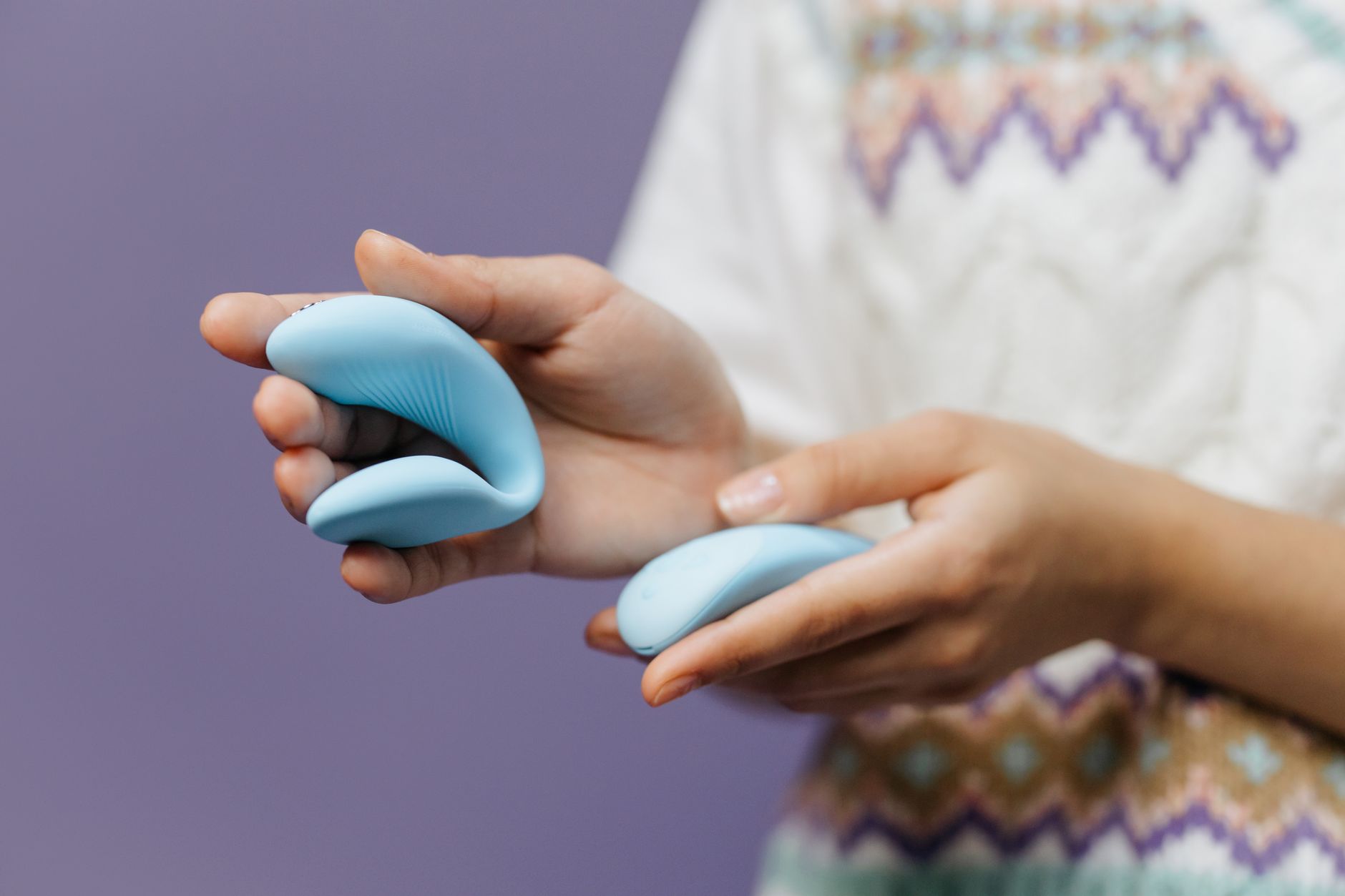
Most vibrators are designed for people who warm up quickly. They're built on the assumption that you'll get there fast and then you want intensity. Lemon clitoral vibrators like the Lem are designed around a totally different model: sustained, building stimulation that works better the longer you use it.
The suction pattern creates a chain reaction in your nervous system. It doesn't slam your clitoris with vibration and hope something catches. Instead, it gently draws blood into the tissue, which makes the nerve endings more responsive, which creates more sensation, which compounds as you keep using it. The longer you spend with it, the better it gets.
This is wildly different from how speed-focused vibrators work. It means lemon sexual toys are actually built for slow burns. You're not fighting the device. The device is designed for the exact timeline your body is now on.
How to restructure foreplay around a longer warm-up
First: stop thinking of foreplay as the thing before the main event. Foreplay is the main event now. Budget for it accordingly.
Start earlier than you think. If penetration used to happen 20 minutes into sex and now you need 35, start touching each other 35 minutes before you expect to feel fully aroused. This isn't extra. It's accurate timing. Most people fail at this phase not because their bodies are slow, but because they keep using the clock from their 30s.
Build in intervals. Instead of continuous stimulation for 30 minutes straight, try this rhythm: five to ten minutes of hands-on touch (kissing, manual stimulation, whatever gets your attention), then bring in the lemon vibrator for ten minutes, then back to hands. These breaks actually speed arousal because they reset your nervous system's filters. You're not habituating to the sensation.
Layer textures. Your brain stops noticing repetition fast. If you use only the lemon clitoral vibrator for 25 minutes, by minute 18 your nervous system is filtering it out as background noise. Switch between the vibrator, your partner's hands, your own fingers, temperature changes (try ice wrapped in a thin cloth on nearby areas, not directly on sensitive tissue). Variation keeps the nervous system engaged.
This is where the shape of lemon vibrators helps. Because the suction stimulation is different from vibration, switching to it feels novel even when you've been at it for a while.
Managing sensation expectations during the slower warm-up phase
Here's the internal battle most people over 40 face: you feel yourself warming up, but it doesn't feel like the intensity you remember. Your brain starts catastrophizing. "This is it. Arousal is becoming muted. Sex is less good now."
You're measuring slow with shallow. They're not the same.
When arousal is building slowly, the sensations are often sharper and more localized than when it came fast. At 25, you might have felt a general flood of pleasure. At 45, you feel specific nerve activation. The clitoris feels more defined. Nerve endings feel more distinct. That's not less sensation. It's often more precise sensation, which many people end up preferring once they stop comparing it to the old model.
Pay attention to what's actually happening in your body instead of what you think should be happening. Notice where you feel tingling. Notice how the lemon vibrator's pattern moves sensation around. Notice what makes your breath change. This isn't meditation language. This is practical redirection. The more you notice what's real, the less energy you waste on what's supposed to be real.
Also: some people over 40 report their most intense orgasms happen in this slower-build phase, because the extended arousal time allows the entire pelvic floor to engage, not just the surface. You might be building toward something better, not something worse.
Adjusting your lemon vibrator settings for extended use
Start lower than you think you need to. If you used to jump straight to setting 4 on another device, begin on setting 1 or 2 with your lemon adult toy. This isn't timidity. It's strategy.
When arousal is slow, your tissue is still sensitizing as you go. A setting that feels gentle at minute 5 feels ideal at minute 15 and becomes intense by minute 25. You're not choosing a power level for the entire session. You're choosing a starting point that lets you layer intensity as arousal actually builds.
After 10 to 15 minutes at a lower setting, your body usually tells you when it's ready for more. That's when you increase to setting 2 or 3. The progression feels natural because you're following actual arousal, not guessing at it.
For the Lem and similar lemon clitoral vibrators, this graduated approach means you're not fighting overload before you're ready. The suction builds sensation organically. You're not working against the device's power. You're partnering with it.
When to bring a partner into the longer warm-up
If you have a partner, the extended timeline creates an unexpected gift: room for communication and cooperation.
Tell them what's happening. "My arousal is slower now. That's normal at this age and it doesn't mean anything's wrong with me or with us." This one conversation prevents months of them interpreting your longer warm-up as disinterest in them.
Decide together whether to be present during solo lemon vibrator time or not. Some couples find it hotter for both people to be actively involved in the entire 30 to 40 minute warm-up. Others prefer the person with the clitoris to have 15 solo minutes with their lemon vibrator, then bring their partner in for the last 15 to 20. Neither is wrong. The key is deciding, not stumbling into awkwardness.
Use the longer timeline as an excuse to experiment. When you have an extra 15 minutes before things escalate, that's space to try something new, talk about fantasy, introduce a position you've been wanting to experiment with. Partners often report that sex becomes less routine when arousal can't be rushed.
The slower timeline isn't a problem to solve. It's a structure you can build something interesting around.
Managing your own mental resistance to the slower pace
This is the hardest part, and nobody likes admitting it: your brain might be your biggest obstacle.
You spent 20 years in a body that warmed up fast. That became your expectation for what arousal feels like. When arousal now takes 30 minutes instead of 10, your brain interprets that as failure. "I'm taking too long." "I'm broken." "My partner is bored."
None of those are accurate, but they're loud.
The solution is almost boring in its simplicity: decide in advance that 30 minutes is the plan. Not 30 minutes while you're hoping it will be 10. Actually plan for 30 minutes. Set it like an appointment. This sounds rigid, but it's liberating. You're not failing to warm up fast anymore. You're doing exactly what you planned to do.
Many people over 40 report that once they stopped treating slow arousal as something to overcome, sex became far more satisfying than it was in their 30s. That's not a consolation prize. It's a genuine shift in what gets to feel good.
FAQ: Arousal, Aging, and Lemon Vibrators
How much slower does arousal actually get between 40 and 50?
It varies wildly by person. Some people notice minimal change. Others shift from a 10-minute warm-up to a 30-minute warm-up. Hormonal status (whether you're approaching menopause, on birth control, on antidepressants) matters more than age itself. The most helpful approach is to measure your own baseline now and plan around that, rather than comparing yourself to some theoretical average.
Can you speed up arousal after 40, or is it just slower now?
You can optimize the pathway, but you're not fighting biology. What you can do is eliminate friction. Stress, distraction, pressure to perform, uncomfortable positions, weak foreplay, and using the wrong device will all make slower arousal feel even slower. Removing those factors helps. What won't work is expecting to snap back to your 25-year-old timeline through sheer willpower.
Does using a lemon clitoral vibrator during the warm-up phase make later arousal harder?
No, and it's worth knowing why. Your body doesn't have a fixed "arousal budget" where using a vibrator early uses it up. In fact, starting with a vibrator during the warm-up phase often builds arousal momentum that makes later sensations easier and more intense. Early vibration primes the tissue. By the time you switch to manual stimulation or partnered touch, everything is more responsive.
If arousal takes longer, does the orgasm take longer too?
Not necessarily. You'll spend more time building, but orgasm itself isn't always elongated. Many people over 40 report that the extended warm-up leads to faster, more intense orgasms once arousal actually crests. The body has been building for 30 minutes. When threshold hits, it's sharp.
Is this slower arousal the same as loss of desire?
No. Loss of desire means you're not interested. Slower arousal means you're interested but the escalation curve is different. One is a motivation problem. The other is a timeline problem. If you notice arousal eventually building, you have slower arousal. If you notice zero interest even with extended time and the right stimulation, that's a separate conversation, possibly involving hormonal changes, medication side effects, or relationship issues. Know which one you're experiencing.
What settings work best on a lemon vibrator if arousal is slow to build?
Start on setting 1 or 2 for the first 10 to 15 minutes. Let sensation build while you're in the earlier arousal phases. Progress to setting 3 or 4 once you feel your body is genuinely more responsive, usually around minute 15 to 20. You're matching the device's intensity to your actual arousal curve, not fighting against it.
The timeline shift is actually an upgrade
It takes guts to stop blaming your body for something your body is doing correctly. Slower arousal after 40 isn't dysfunction. It's a signal that you need a different rhythm, and once you accept that rhythm, it often feels better than what came before.
Lemon vibrators work with this timeline instead of against it. The sustained suction pattern, the ability to layer intensity, the design that rewards time over speed. all of it aligns with how your nervous system actually wants to work now.
Your arousal didn't get worse. The tools and expectations around it just needed updating. If you want to explore what's actually possible with a slower, deeper warm-up, that's exactly what lemon sexual toys are built for. Reach out if you want to talk through what might work best for your body and situation.