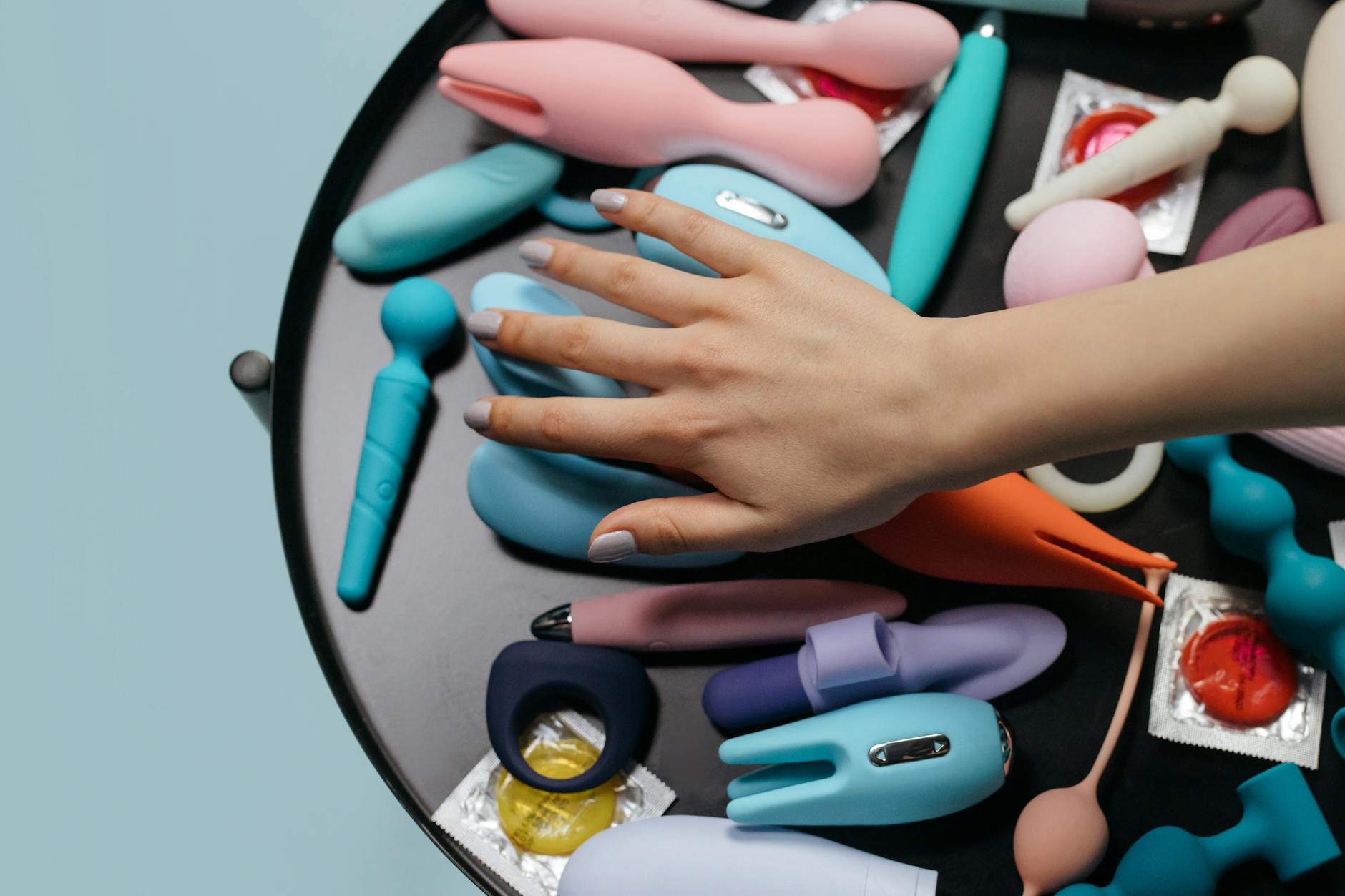
Let's talk about the elephant in the bed
You're having sex with someone you care about. Everything looks fine from the outside. But inside your head, you're somewhere else entirely. Your partner is touching you and it feels like they're touching someone else. You're physically present but emotionally and sensorily absent. This is numbness during partnered sex, and it's far more common than you'd think.
I see this in my practice constantly, and the first thing I tell clients is this: it's not a personal failing. It's not that you don't love your partner or that something is broken in you. Numbness during sex is usually a signal that something about the context, the dynamic, or the way you're approaching the experience isn't working for your nervous system. And once you understand why it's happening, you can actually fix it.
Why your body goes numb during partnered sex
Numbness during sex usually points to one of three things happening together: disconnection from your own desire, performance anxiety, or what therapists call "spectatoring." You're watching yourself have sex instead of inhabiting the experience.
When you're in spectatoring mode, your brain splits. Part of you is trying to monitor whether you're enjoying this, whether you look good, whether your partner is satisfied, whether you're orgasming fast enough. This constant self-monitoring pulls your attention out of your body. Your nervous system, sensing this divided focus, downregulates sensation as if to say: "You're not actually here, so I'm turning down the volume."
There's also the relational layer. If there's subtle resentment in the relationship, unspoken expectations, or a dynamic where your pleasure isn't centered, your body learns to protect itself by checking out. This isn't conscious. It's an old survival strategy your nervous system adopted, probably from way earlier than this relationship.
Third, sometimes the physical stimulation just isn't specific enough. Partnered sex often involves broad, indirect contact. Your clitoris might not be getting the direct, sustained attention it needs to build real sensation. So you lie there waiting to feel something, nothing builds, and your system shuts down.
The role of attention in sensation
Here's something neuroscience backs up completely: sensation requires attention. You cannot feel pleasure if your attention is split between what's happening to your body and everything else you're worried about. The clitoris has 8,000 nerve endings. But only if you're actually present with them will you feel their input.
One of my clients put it this way: "I realized I was narrating my own sex life instead of living it." That's spectatoring. And it kills sensation every single time.
When you use a lemon clitoral vibrator like the Lem, the intensity and specificity of the sensation forces your attention back into your body. It's harder to narrate or judge your experience when you're experiencing something that directly targets thousands of nerve endings. The vibration literally demands your attention.
Why clitoral vibrators cut through numbness
A vibrator is a tool for reclaiming attention. It's precise. It's intense enough that your nervous system can't ignore it. And crucially, it puts you back in control of your own pleasure.
When numbness happens in partnered sex, part of what's going on is that your partner's touch has become background noise. You're used to it, or you're waiting for it to lead somewhere, or you're managing their experience instead of tracking your own. A lemon vibrator resets that. You choose the intensity. You choose the rhythm. You choose exactly where the stimulation goes. That autonomy is itself pleasurable and grounding.
I often recommend that couples introduce a vibrator into partnered sex specifically to break the numbness cycle. It sounds counterintuitive. Partners sometimes worry it means they're not enough. But what's actually happening is you're using a tool to teach your nervous system how to pay attention again. Once it remembers, you can often bring that heightened presence back to your partner's touch too.
How to actually use it with a partner
First, separate the conversation from the sex. Don't introduce it mid-encounter. Have a real talk beforehand. Say something like: "I've noticed I drift during sex and I hate it. I want to feel more present with you. I'm thinking about trying a vibrator, not instead of us, but alongside what we're already doing. Would you be open to that?"
Most partners respond well when you frame it as a tool for connection, not a replacement. Because it genuinely is.
When you actually use it together, start by using it on yourself while your partner is present. This does two things. One, you get to experience the sensation without the added pressure of managing someone else's feelings. Two, your partner gets to see you actually present with pleasure, which is often hotter than anything else that happens.
Then experiment with your partner using it on you. Some people find that intensely connecting. Others prefer to maintain that control themselves. There's no one way. The point is that the vibration creates a focal point. Your nervous system locks onto it. Your mind quiets. Numbness breaks.
The nervous system reset
What you're really doing when you use a lemon clitoral vibrator to address numbness is giving your nervous system permission to wake back up. You're saying: "It's safe to feel things. It's okay to be present." That message travels fast. Once your nervous system remembers what focused sensation feels like, it becomes easier to access it in other contexts too.
I've had clients report that after a few weeks of using a vibrator during partnered sex, they started feeling more present even without it. Their nervous system learned the pathway back. That's not magic. That's how neural pathways work. They strengthen with practice.
What actually changes when numbness lifts
When you reconnect to sensation during sex, a few things shift simultaneously. First, you get actual physical pleasure, which sounds obvious but is genuinely transformative if you've been numb for a while. Second, your partner gets to see you present and aroused, which actually deepens intimacy for most couples. Third, and maybe most important, you remember that your pleasure matters and that it's worth pursuing.
Most people who experience numbness during partnered sex have also internalized the belief that their pleasure is secondary. They're focused on being a good partner, being attractive, providing an experience. A vibrator recenters the conversation on you. On what feels good to your body. On your sensation and your attention.
That's the actual medicine. The vibration is just the delivery mechanism.
When to talk to a therapist
If numbness during sex is paired with numbness in other parts of your life, or if it's connected to depression, anxiety, or past trauma, a therapist is worth seeing. Sex isn't separate from the rest of your life. If your nervous system is dysregulated, it shows up in the bedroom.
But many people find that using a tool like a lemon clitoral vibrator actually brings them important information about their body and their relationship. It can be the opening to deeper conversations. It can be the first step toward reconnecting.
The simple truth
You deserve to feel things during sex. You deserve to be present. You deserve tools that help you get there. A lemon vibrator isn't a patch over a deeper problem, but it often becomes the first step toward solving it. Your body remembers what pleasure feels like. You're just helping it pay attention again.
People Also Ask
Is it normal to feel numb during sex with a partner you love?
Absolutely. Numbness during partnered sex has nothing to do with how much you love someone. It usually means your nervous system is in a protective state or your attention is split between pleasure and performance. It's incredibly common, especially for people who've been socialized to prioritize their partner's experience over their own. The fact that you notice it means you're already halfway to fixing it.
How do lemon vibrators help with feeling disconnected during sex?
Lemon clitoral vibrators provide intense, specific stimulation that your nervous system can't ignore. This forces your attention back into your body and out of your head. The precision and intensity of a device like the Lem cut through the distraction that usually causes numbness. Using a vibrator also puts you back in control of your own pleasure, which is psychologically grounding and helps your nervous system learn that it's safe to feel things.
Can introducing a vibrator actually improve partnered sex if I feel numb?
Yes, frequently. When numbness is about attention and disconnection rather than a medical issue, a vibrator can be genuinely transformative. It gives you a tool to reconnect with sensation, shows your partner what arousal looks like on your body, and often improves intimacy between partners. The key is framing it as a tool for deepening your experience together, not replacing your partner's touch.
Should I tell my partner I want to use a vibrator if I feel numb during sex?
Yes. Honesty is non-negotiable here. But how you say it matters. Don't lead with "I'm numb." Lead with "I want to feel more present and connected with you." Most partners are relieved to have a solution to a problem they've sensed but didn't know how to address. If your partner responds poorly to the idea, that's actually useful information about the relationship dynamic.
Does using a vibrator mean my partner isn't satisfying me?
No. A vibrator isn't about satisfaction. It's about attention and reconnection. Many people use vibrators with partners they love deeply. It's not an either/or. You can use a vibrator during partnered sex and also love your partner's touch. In fact, once you remember how to be present, you usually appreciate your partner's touch more, not less.
What if I feel numb even with a vibrator?
Then the numbness is probably rooted in something deeper: trauma, depression, a relationship dynamic that doesn't feel safe, or severe dissociation. A vibrator is a tool for reconnection, but it works best when the underlying nervous system is somewhat regulated. If a vibrator doesn't help after a few tries, that's a signal to talk to a therapist or a doctor who can help you address what's underneath the numbness.