Starting over after divorce is a different kind of vulnerability
Divorce changes how you approach intimacy. You're not just relearning sex. You're relearning trust, relearning your own body after years of routine, and learning to be vulnerable with someone completely new. That's layered work, and pretending it's simple does nobody any favors.
Here's what I see most often in my practice: people bring old patterns into new relationships without realizing it. After divorce, sex can feel like either a test you're trying to pass or a minefield you're trying to navigate. Neither of those mindsets leaves room for actual pleasure.
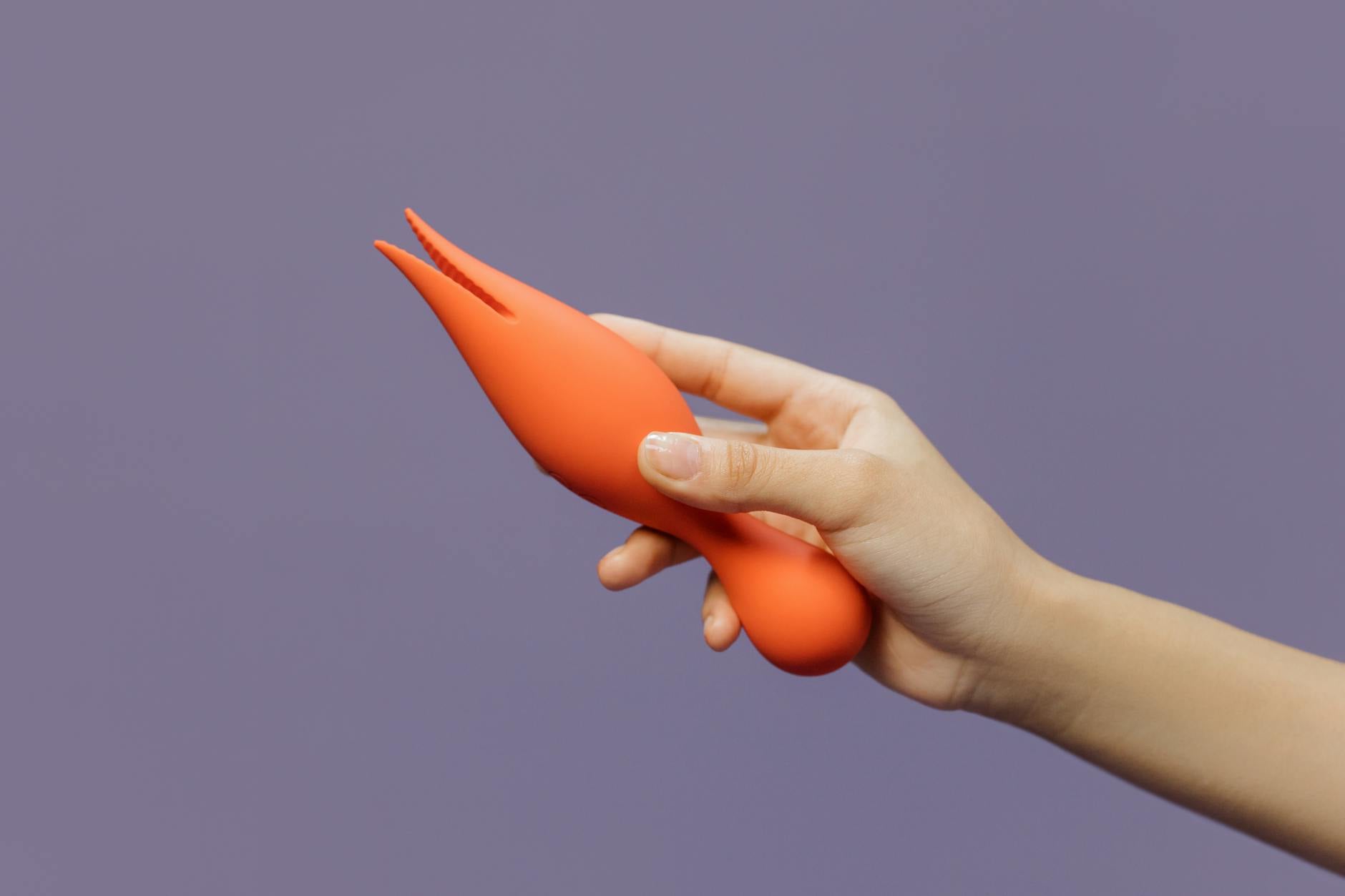
Lemon vibrators, specifically, help interrupt that cycle. They're a third presence in the conversation, which sounds odd until you understand why it matters.
Why introducing a tool early actually builds trust faster
Most couples wait to introduce vibrators until there's a problem. Sex isn't working, desire has stalled, and one partner suggests a vibrator like it's a repair manual. By then, the conversation already carries shame or defensiveness.
Post-divorce, you have an advantage. There's no baseline to defend. You don't have 15 years of "this is how we've always done it" locked into muscle memory. Starting fresh gives you permission to co-create something instead of retrofitting a solution onto an existing dynamic.
Introducing a lemon clitoral vibrator early (I mean in the first month or two, not the first date) sends a clear message: "This is about both of us having the best experience possible. Not about what's missing. About what we can build together." That's radically different from the medical or desperate tone most couples use when they finally talk about toys.
The conversation itself becomes intimate. You're not debating whether vibrators are "normal." You're saying out loud what feels good, what you want to try, what turns you on. That vulnerability, voiced together, builds trust faster than months of performative sex.
The permission conversation happens first
Before you even open the box, you need to explicitly agree that introducing pleasure tools is an experiment, not a referendum on anyone's sexuality or adequacy.
Say something like: "I want to try this together. Not because something's wrong. Because I want to know what makes you come hardest and I want you to know the same about me. Can we make that a priority?"
That question does three things. It centers mutual pleasure instead of individual benefit. It gives your partner explicit permission to advocate for their own body. And it frames the vibrator as a tool for discovery, not damage control.
If your partner seems hesitant, resist the urge to sell them on it. Hesitation after divorce is normal. Someone spent years with a person who couldn't meet their needs (or they couldn't meet their partner's). Relearning trust isn't instant.
Instead, ask: "What are you worried about?" Listen to the actual answer. Often it's not "vibrators are weird." It's "What if I can't make you happy?" or "What if this means you'll leave me too?" That's a different conversation entirely, and it's the one that matters.
How to actually introduce it the first time
Honestly, don't do it during sex. Do it the night before, when you're both clothed and calm. Show them the device. Let them hold it. Explain the settings. This removes the performance pressure from the actual experience.
Say: "I ordered this. I want to try it together next time we have sex. Here's how it works. Here's what it does. Here's what I'm hoping it feels like. Do you have questions?"
Then drop it. Literally put it on the nightstand. Let the idea sit overnight. Anticipation is your friend here. It gives your brain time to get curious instead of defensive.
When you do use it, start with yourselves. Use the lemon vibrator on your own body first while your partner watches. This is not performance sex. This is education. You're showing them what pleasure looks like on you. Most partners find this incredibly hot, and more importantly, it teaches them your body's rhythm.
Then they can try it on you. Slowly. Without pressure to "do it right." Pleasure isn't technical. There's no wrong speed or pressure. The only rule is "tell me what feels good and I'll remember it."
Why lemon clitoral vibrators work especially well post-divorce
Lemon vibrators, as a category, are designed for precision. They're not bulky. They don't require a lot of setup or communication mid-session. The suction-based stimulation on clitoral vibrators feels different from traditional vibration, which is useful because it means your new partner is discovering new sensation on your body, not just "trying the thing I used to do but with a toy."
That difference matters psychologically. It signals newness. It says we're building something different together, not replaying the past with accessories.
The intensity is also controllable, which means your partner can watch your response and adjust. That feedback loop, where they learn your body in real time, rebuilds the trust that divorce fractured. You're proving "I will listen to you and adjust" over and over in the smallest ways.
Managing the shame that still shows up
Even if you intellectually know vibrators are normal and fine, divorce can leave a residue of shame. You might worry that wanting pleasure means you're greedy. Or that suggesting a toy makes you seem high-maintenance. Or that your partner will judge you for wanting something specific.
Those fears are divorce echoes, not facts. Name them if they surface. Say: "I'm feeling a little self-conscious about this. It has nothing to do with you and everything to do with my own baggage." Your partner can't fix something you don't tell them about.
And on the flip side, if your partner introduces the vibrator to you, receive it the same way. Don't assume it's a criticism. Don't turn it into "they want this because they're not satisfied with me." That's the old marriage talk. In a new relationship, a suggestion is just a suggestion. It's not evidence of failure.
The bigger conversation underneath all of this
Divorce often means one or both partners didn't speak up clearly enough about what they needed. Sex got routine. Desire went unspoken. Resentment accumulated. You didn't fail because you weren't adventurous enough. You failed because the relationship didn't have a structure for honest conversations about pleasure.
Introducing lemon vibrators early, intentionally, with permission and curiosity, is actually a way to build that structure from the start this time. You're saying: "We talk about sex. We experiment. We ask for what we want. We listen."
That's not kinky. That's just mature.
What if your partner still resists?
Some people genuinely don't want to use toys. That's fine. It's not a referendum on the relationship. But pay attention to whether the "no" is a preference or a boundary rooted in shame or control.
A preference sounds like: "I don't think that's for me, but I'm curious how you feel about it and I'd like to understand why you're interested."
A boundary rooted in shame or control sounds like: "I don't want you using that. It bothers me that you even thought about it."
One is a starting point for negotiation. The other is a yellow flag. After divorce, you deserve a partner who can have curious conversations about pleasure, not someone who polices your sexuality.
If this is the hill they're willing to die on, that's information. Store it.
Moving forward with permission and patience
Rebuild ing intimacy post-divorce is slower than new-relationship energy makes it seem like it should be. There will be awkward moments. There will be times when old fears surface. That's not a failure. That's the actual work of building something new.
Lemon vibrators don't fix broken trust. But they do create a structure where you practice vulnerability, listen to your partner's needs, and make decisions together. Over time, that practice rewires the brain's relationship to intimacy.
Start with curiosity instead of pressure. Start with permission instead of performance. And remember: your partner chose you. After everything you've both been through, they chose to show up. That's already the hardest part.
FAQ
Can we use a lemon vibrator if my partner is worried it means I don't want them?
Yes, but the conversation comes first. Your partner's fear is real, even if it's not true. Say: "I want you. I also want us to explore what feels incredible for me, and I want to do that with you. That's about abundance, not replacement." Reassure them by involving them. Let them hold it, control it, watch your response. That hands-on participation often dissolves the threat they're imagining.
How soon after meeting someone is it okay to introduce lemon vibrators?
After about 4-6 weeks, once you've had sex a few times and the early nervousness has worn off. But there's no hard rule. It depends on how your partner is responding and how much intimacy you've already built. If you're still in the "proving myself" phase, wait a bit longer.
What if we buy one and neither of us wants to use it after?
That's totally okay. Not every experiment works. The device isn't the point. The conversation you had about wanting pleasure is. Some couples introduce a vibrator, use it once, and never touch it again. Other couples find it opens up whole new ways of connecting. Both are valid outcomes.
How do I talk to my partner about what settings or techniques feel best?
Use your words while it's happening. "A little slower." "That's perfect." "I like it when you..." Your partner is not a mind reader, and they don't need to be. Feedback during is the clearest communication possible. Most partners find directing you through pleasure incredibly hot.
Will using a vibrator make it harder to orgasm without one?
Not in healthy nervous systems. Your body can absolutely experience pleasure multiple ways. Using a lemon clitoral vibrator doesn't retrain your sensitivity. It just adds another skill to your repertoire. Most people who use vibrators regularly report having easier orgasms in all contexts, not harder ones.
What if I'm the partner who's hesitant about the vibrator?
That's worth exploring in yourself first. Ask: Am I worried about not being enough? Am I uncomfortable with pleasure in general? Do I have shame around sexuality that feels activated? Once you know what the actual fear is, you can discuss it from a place of honesty. Your partner probably doesn't want to use a vibrator to reject you. They want to have better orgasms, and they want you there with them. Those two things are compatible.