
Let's be real about nervous pleasure
You want to explore solo pleasure. But something feels stuck. Maybe you grew up with the message that touching yourself was wrong. Maybe you've never done it and the idea feels awkward. Maybe past partners made you feel self-conscious, and now you're uncertain how to reconnect with your own body alone. Whatever the reason, that nervousness is real, and it's more common than you think.
Here's what I've learned working with people rebuilding trust with their own bodies: the nervousness doesn't disappear because you decide it should. It softens because you create experiences where pleasure feels safe, manageable, and unrushed. Lemon clitoral vibrators, specifically the suction-based design, help because they create that exact kind of gentle, controlled environment. You're not forcing yourself to feel something. You're giving your body permission to respond at its own pace.
Why nervousness around solo pleasure is different from other anxieties
It's not really about the vibrator. It's about what solo pleasure means in your story. For some people, it feels selfish or indulgent. For others, it brings up shame from childhood or religious messaging. Some people worry that wanting solo pleasure means their relationship isn't enough, or that they're "supposed" to feel satisfied by their partner alone. That's a lot of weight to carry.
The physiological part is easier to solve than the emotional part. Your body is ready long before your mind gives permission. That gap between body readiness and mental permission is where lemon vibrators become genuinely useful. They provide a concrete, external structure that says: "This is okay. This is intentional. This is for you."
When you hold a device in your hand, it's harder to pretend you're doing something wrong. You've made an active choice. You've invested in something designed specifically for your pleasure. That shift from passive to active, from accidental to intentional, is powerful.
Starting with curiosity instead of pressure
The worst thing you can do when you're nervous is set expectations. "I'm going to have an amazing orgasm" or "I'm going to figure out what I like" puts you in achievement mode, which is the opposite of what nervous bodies need.
Instead, start with pure curiosity. Before you even turn on the lemon vibrator, spend time just holding it. Notice the weight, the temperature, the texture. Read about how it works. Let your nervous system register that this is a tool, not a test.
Then, turn it on at the lowest setting and explore your body with no destination in mind. Press it gently against different areas. Your inner thigh. Your hipbone. Your collarbone. The goal isn't pleasure yet. The goal is data: where does this feel interesting? Neutral? Surprising? Building that map of your own body, without judgment, is the entire first phase.
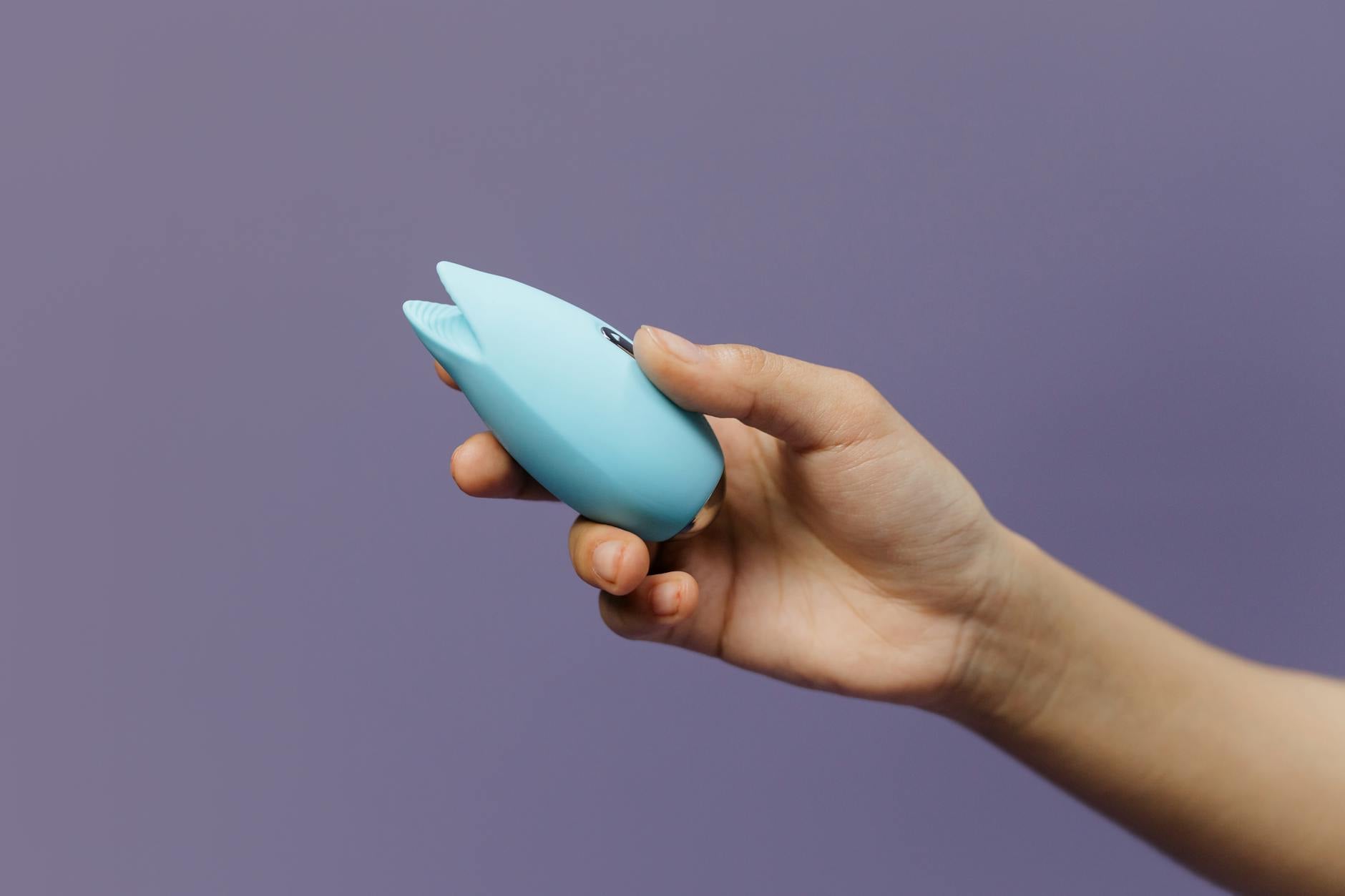
Photo by cottonbro studio on Pexels
Most people skip this phase because it feels slow. Resist that. Your nervous system needs evidence that this is safe before it opens up. That evidence comes from repeated, gentle, consequence-free exploration. Three five-minute sessions of gentle exploration do more for anxiety than one intense session of trying to perform.
The actual mechanics when nervousness is high
Here's what I recommend:
Create physical privacy. Not just being alone, but making it real. Lock the door. Put your phone in another room. Tell your household you need uninterrupted time. Your body won't relax if there's a 40 percent chance someone will knock.
Warm up your body first. Nervous bodies are tense bodies. Spend ten minutes with warm water, gentle movement, or a long shower. Temperature and relaxation are related. A cold body stays in defense mode.
Start on the lowest setting. This is not a test of your capacity. It's the opposite. The lowest setting on a lemon vibrator is enough to create sensation. If you're nervous, that's the sweet spot. Your body can respond without feeling overwhelmed.
Touch yourself first, then the vibrator. Before introducing the device, spend two or three minutes with your hands. This tells your nervous system: "This is me, in my body, doing this intentionally." Then bring in the vibrator as a tool that amplifies that intention, not as a replacement for it.
Stop whenever. Not when you feel uncomfortable, but whenever you want to. The goal is to prove to your body that you're in control. That you can start, pause, or stop at any moment. That's where safety lives.
Building a solo pleasure ritual that sticks
Nervousness thrives in randomness. It's easier to be anxious once than to be anxious every time. Build a ritual.
This could look like: Tuesday and Friday evenings, 7 p.m., after you've showered and had tea. Or Sunday mornings before anyone else is awake. Pick a time and a circumstance that feels sustainable, not like a performance you have to earn.
One client told me she kept a lemon vibrator in a small silk pouch on her nightstand. The pouch made it feel intentional and private, not clinical. She'd see it during the day and her body would start anticipating that time. By the fourth week, her nervous system had learned: "This is a safe thing we do together." The anxiety dropped significantly because her body knew what to expect.
The ritual isn't about dogma. It's about creating conditions where your nervous system learns that solo pleasure is a normal, scheduled, safe part of your life. Like exercise or sleep or eating. Just for you.
What changes when you keep going
In the first few weeks, you might not feel much of anything besides the vibration itself. That's completely normal. Your body is busy being nervous. It's not available for pleasure yet.
Around week three or four, people usually report a shift. The nervousness doesn't vanish, but it becomes background noise instead of the main event. You can feel both nervous and curious at the same time. Both scared and interested. That's the door opening.
Most importantly, you start to disconnect solo pleasure from performance or outcome. You're not trying to feel something. You're giving your body space to respond. And when you approach it that way, response happens more easily.
That's when lemon clitoral vibrators become less of a tool to overcome anxiety and more of a straightforward device for pleasure. The anxiety was never about the vibrator. It was about permission. Once you've given yourself permission repeatedly, the vibrator just becomes the thing that feels good.
If you've felt stuck around solo pleasure for a long time, reaching out to a therapist who specializes in sexual health and anxiety can help you move through deeper blocks. There's no shame in that. But the path usually starts here: with curiosity, safety, and a tool designed specifically to help your body trust the experience.
People also ask
Is it normal to feel nervous about solo pleasure as an adult?
Absolutely. Nervousness around self-pleasure comes from messaging you received growing up, relationship patterns, past experiences, or cultural and religious beliefs about bodies and sexuality. None of those messages were your choice, and they don't reflect your current values. That gap between old messaging and new intentions naturally creates anxiety. Recognizing the nervousness is actually the first sign you're moving toward a healthier relationship with your own body.
Can a lemon vibrator really help if I feel ashamed of masturbation?
It can, but not magically. The vibrator itself doesn't erase shame. What it does is create structure and intentionality around the experience. When you're holding a device designed specifically for your pleasure, it's harder to pretend you're doing something wrong. You're not sneaking. You're not hiding. You're actively choosing something for yourself. That shift in framing, repeated over time, starts to change what shame feels like. The vibrator is the anchor point for that reframing.
How long before nervousness goes away completely?
It depends on how deep the nervousness is rooted. For some people, four to six weeks of regular exploration shifts the anxiety significantly. For others, it takes a few months of consistent practice. The timeline matters less than the consistency. Your nervous system learns through repetition that solo pleasure is safe. That learning doesn't happen in one intense session. It happens through many small, safe experiences. Keep showing up, and the nervousness naturally recedes.
What if I still don't feel pleasure after trying for a while?
First: you're not broken. Some people need more time, some need a different kind of stimulation, some need to work through deeper emotional blocks before sensation fully opens up. Second: consider talking to a sex therapist or somatic practitioner. They can help you understand whether the numbness is anxiety-related, medical, or something else entirely. Third: try different settings on the lemon vibrator. The clitoral suction design works for many people, but "works for many" doesn't mean works for everyone. Varying pressure, speed, and location matters.
Is solo pleasure okay if I'm in a relationship?
Completely. Solo pleasure and partnered pleasure aren't competing. They're different experiences. Exploring solo, you learn your own body without the context of anyone else's needs or presence. That knowledge makes partnered pleasure deeper and more authentic because you know what you actually want. Partners who understand that usually appreciate it. If your partner has feelings about your solo pleasure, that's a conversation worth having, but it doesn't change the fact that solo pleasure is healthy and normal.
Should I tell my partner I'm using a lemon vibrator for solo pleasure?
That's your choice. There's no rule. Some people find that openness strengthens their relationship. Some people prefer privacy. What matters is that you're not keeping it secret from yourself. The shame of hiding it from yourself is worse than any conversation with a partner. If you do decide to tell them, frame it clearly: "This is for me. It's about reconnecting with my body." Most partners respect that boundary. If yours doesn't, that's useful information about your relationship.