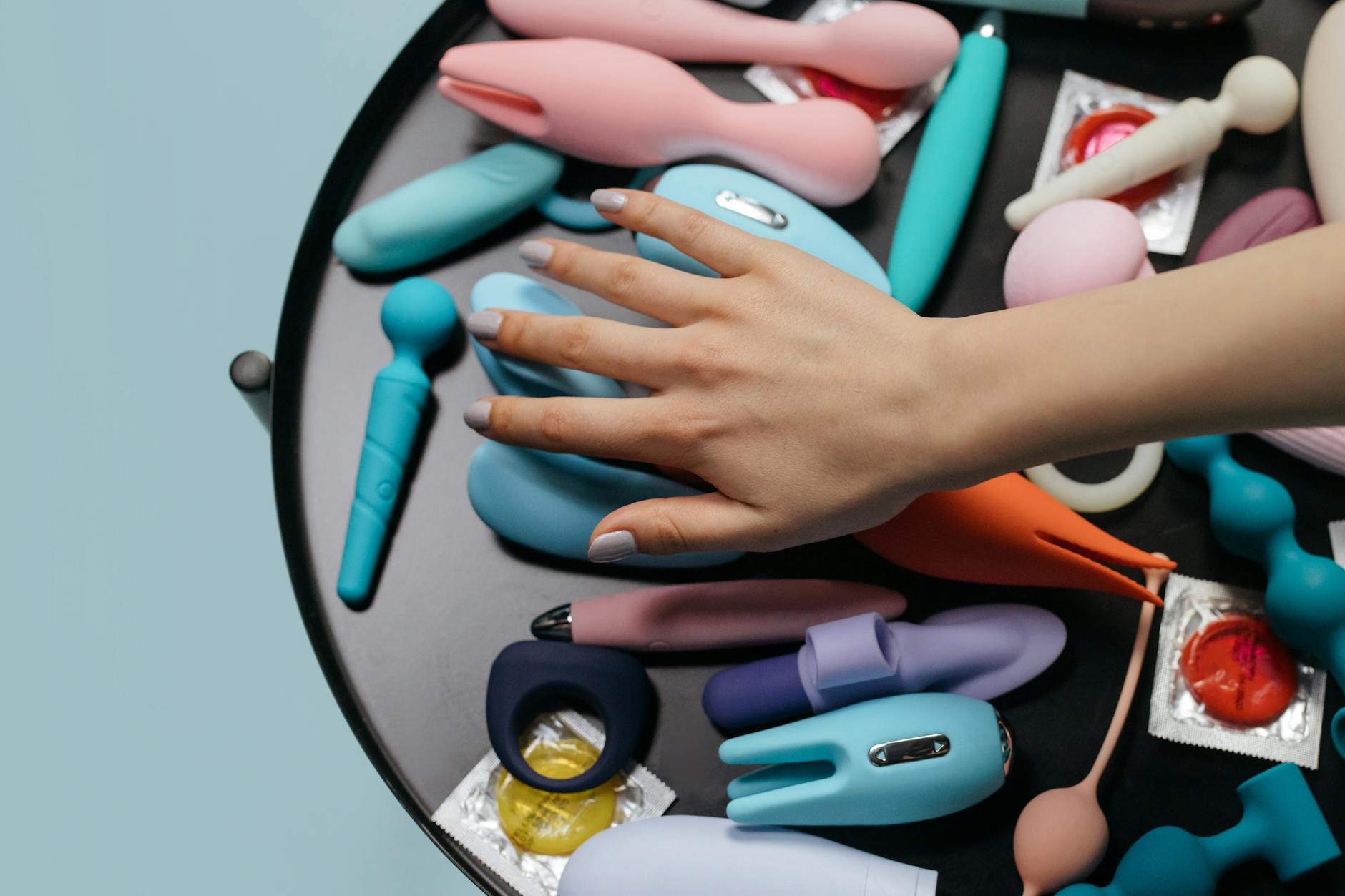
Here's what nobody tells you about postpartum desire
Your OB will clear you for penetrative sex at six weeks. What they often won't mention is that six weeks is a minimum, not a signal that everything is ready, and that clitoral pleasure is a completely separate conversation than intercourse. Between you and me, knowing the difference can transform your entire recovery experience.
The postpartum period is messy, nonlinear, and deeply individual. Your body is rebuilding its pelvic floor, rebalancing hormones, managing sleep deprivation, and often grieving the body you had. Adding pleasure back into that landscape requires information, honesty, and permission.
The medical timeline: what the research actually says
Let's start with what healers agree on. After vaginal delivery, tissue needs roughly four to six weeks to stop actively bleeding and for surface wounds to close. After cesarean, it's similar—roughly four to six weeks for the incision to close (though internal healing takes longer). This is where most conversations about sex stop, and why most are incomplete.
Clitoral stimulation is fundamentally different from penetration. You're not putting pressure on healing tissue. You're not introducing infection risk in the same way. A 2018 review in Sexual Medicine Reviews found that external stimulation, including vibration, was associated with lower rates of complications when resumed at four to six weeks postpartum—earlier than penetrative activity was safe.
Here's the nuance that matters: healing isn't binary. Your tissue is more fragile, your nerve sensitivity might be different (sometimes heightened, sometimes dampened), and your pelvic floor is learning to function under new neurological conditions. A lemon vibrator's suction-based stimulation is gentler on sensitive, thinner postpartum tissue than traditional vibration, which is why many therapists I work with recommend air-suction devices like the Lem for this phase.
What happens in your pelvic floor during and after birth
Your pelvic floor muscles stretch dramatically during labor and birth. Even with an uncomplicated vaginal delivery, those muscles are bruised, swollen, and somewhat traumatized. The nerves that feed sensation and pleasure through that area are also irritated.
If you had an episiotomy (a surgical cut to widen the vaginal opening), you're healing from a laceration plus the surrounding tissue trauma. If you had a cesarean, you avoided direct pelvic floor trauma, but your lower abdomen, including your core and the fascial tissues supporting your pelvic floor, are healing from major surgery.
There's also the hormone piece. Immediately postpartum, estrogen and progesterone crater—especially if you're breastfeeding, which suppresses estrogen further. Lower estrogen means tissue is thinner, more fragile, and less lubricated. It also means the pelvic floor itself is less supported.
All of this is temporary. By around three to four months postpartum, estrogen starts to recover (faster if you're not breastfeeding). By six months, most people are close to baseline—though breastfeeding parents may not fully recover estrogen until weaning.
When lemon vibrators and clitoral stimulation become safe
Here's my clinical stance: external clitoral stimulation with a gentle device can resume at four weeks if you have no active bleeding, no signs of infection, and emotional readiness. That said, "can" does not mean "should," and emotional readiness is doing a lot of work in that sentence.
Postpartum bodies are flooded with oxytocin, prolactin, and cortisol—hormones that support bonding and survival but don't necessarily create desire. Many people don't feel genuinely interested in pleasure until eight to twelve weeks. If that's you, that's not a malfunction. That's biology.
When you do feel ready—and that readiness often looks like curiosity rather than desire—here's the safer approach:
Weeks 4-6: External clitoral stimulation only, starting at the lowest intensity. A lemon vibrator on settings 1-2, applied for short bursts. Think of this as checking in with sensation, not pursuing climax. Stop if you feel sharp pain, heavy bleeding, or a pulling sensation deep in your abdomen.
Weeks 6-8: You can increase time and explore middle intensity settings if the first phase felt good. Your pelvic floor is gaining stability. You're still not introducing penetration or pressure that involves the internal pelvic floor musculature.
Weeks 8-12: Penetrative activity and deeper stimulation can begin if your healthcare provider cleared you and you feel physically and emotionally ready. But there's no rush. Many people wait longer, and that's equally valid.
The emotional and hormonal piece (which matters more than the calendar)
Here's what I see constantly in my practice: people following the six-week clearance medically but finding that pleasure feels inaccessible emotionally. Postpartum depression and anxiety can suppress arousal. Sleep deprivation absolutely can. And the psychological weight of your body changing, healing from trauma, managing a newborn, and potentially struggling with breastfeeding creates a context where pleasure feels selfish or even possible.
That context is real and not to be minimized. If you're struggling with intrusive thoughts, hypervigilance, or deep anxiety, talking to a therapist (ideally one trained in postpartum mental health) before reintroducing sexual activity is genuinely wise.
For people without depression or anxiety, the main obstacle is usually permission. You've been touched constantly by a baby. Your body has been instrumental rather than yours. Choosing pleasure for yourself—even solo pleasure with a lemon vibrator—can feel like a minor rebellion. It's not. It's recovery.
What to watch for: red flags and normal weirdness
Sharp, shooting pain during or after stimulation isn't normal. Heavy bleeding or passage of clots suggests you've irritated healing tissue. A pulling sensation deep in your abdomen or pelvis means you've engaged the pelvic floor too intensely and should scale back.
Mild spotting after stimulation? Normal. A day or two of mild cramping? Normal. Soreness the next day, similar to muscle soreness? That's your pelvic floor telling you it was working hard—you can dial back next time.
Nerve sensitivity can be wild postpartum. Some people find their clitoris is more sensitive (sometimes uncomfortably so). Others find it's numb or feels distant. This usually normalizes by four to six months but can take longer. Start low, go slow, and notice what changes over time.
Using lemon vibrators safely during recovery
If you're choosing a device during this window, an air-suction vibrator like the Lem is a strategic choice. It doesn't require traditional vibration frequency, which can be too intense on postpartum tissue. It stimulates through gentle pressure and suction, which allows you to control intensity more precisely and which most people find more comfortable on swollen or sensitive tissue.
Water-based lubricant is essential—not because something is wrong with you, but because postpartum estrogen is low. External lubrication makes the experience more comfortable and reduces the friction that can irritate healing tissue.
Start with your device at the lowest setting. Use it for five to ten minutes max on the first attempt. If it feels good and you have no pain or unusual bleeding the next day, you can gradually increase duration and intensity. Think in increments, not jumps.
Bringing your partner into the conversation
If you have a partner, this is one of the most important conversations you can have—and also one of the most commonly skipped. Many partners are terrified of hurting you or causing damage. Others are eager to resume full sexual activity and don't realize that clitoral stimulation and penetrative sex are separate timelines with different safety windows.
Telling your partner clearly—"I want to explore solo pleasure first, at my own pace" or "I'm interested in external stimulation but not penetration yet"—removes ambiguity and usually reduces pressure (even unspoken pressure). Partners who understand the healing process are more likely to be patient and supportive.
If you want your partner involved in clitoral stimulation, they can absolutely participate. Hands are often gentler than devices and give you more control over pressure. If you're using a lemon vibrator together, position them so they're applying it, not you, which can actually feel more relaxing psychologically.
The bigger picture: postpartum recovery isn't linear
Some people feel ready to resume clitoral pleasure at six weeks. Others don't feel genuinely interested until six months. Both timelines are normal. Your body's healing is on its own schedule, independent of anyone's expectations—including your own.
What matters is information, honesty about where you actually are (not where you think you should be), and permission to move at your own pace. The postpartum period is temporary. Pleasure will return. And when it does, you get to define what that looks like.
If you're struggling with pain, numbness, complete loss of desire beyond the first month, or anything that feels wrong, talk to your healthcare provider or a pelvic floor physical therapist. Postpartum complications are common and highly treatable. You don't have to white-knuckle through.
FAQ: Your postpartum pleasure questions answered
Can I use lemon vibrators while breastfeeding?
Yes. Breastfeeding doesn't require any adjustment to how you use a vibrator. The main thing to know is that breastfeeding suppresses estrogen, which means postpartum tissue fragility lasts longer—often six to twelve months instead of three to four. This is why lubrication and starting low is especially important if you're nursing. Beyond that, you're good to go.
Will orgasms feel different postpartum?
Yes, often. Your pelvic floor architecture is different postpartum. Orgasms might feel shallower, more localized, or require different stimulation than before. Some people find orgasms are actually more intense postpartum. This usually settles into a new normal by six months but can continue to evolve. It's not permanent damage—it's adaptation. That said, if you're having pain with orgasm or no orgasms at all six months out, see a pelvic floor physical therapist.
Is it safe to use vibrators if I had a cesarean?
Yes. You're not putting pressure on your incision with clitoral stimulation. You can resume external stimulation at four weeks the same way you would after vaginal delivery. Penetration can wait until you're cleared by your surgeon (usually six weeks) and you feel ready. Internal pelvic floor engagement takes longer to heal after cesarean because of the internal abdominal surgery involved, so be gentle with yourself.
What if I have no desire six weeks postpartum?
That's completely normal and not a sign of a problem. Postpartum hormones, sleep deprivation, and the physical and emotional load of newborn care suppress desire in most people. Expecting desire to bounce back on a calendar schedule is setting yourself up for frustration. Give it time, manage your stress where you can, and revisit the conversation at three months. If you're still feeling zero desire at six months and also feeling depressed or disconnected, talk to a mental health provider.
Can I use lemon vibrators if I had tearing or stitches?
Yes, but wait until the active healing phase is over (usually four weeks) and stick to external stimulation only. Avoid any pressure or stimulation directly on the tear site—keep stimulation to the clitoris, away from the perineal area. If you had a significant tear (third or fourth degree), talk to your healthcare provider before resuming any sexual activity. They can tell you when it's genuinely safe and might recommend pelvic floor physical therapy.
How do I know if I'm healed enough?
You should have no active bleeding, no signs of infection (fever, pus, severe pain), and clearance from your healthcare provider. Beyond that, it's about listening to your body. If stimulation causes sharp pain, feels wrong, or triggers heavy bleeding, you're not ready yet. If it feels okay and you have mild discomfort the next day but no pain during, you're probably fine to continue cautiously.
The bottom line
Postpartum bodies heal at their own pace. Clitoral stimulation can resume earlier than penetration because you're not putting pressure on actively healing pelvic floor tissue. A lemon vibrator, used gently and with awareness, can be part of that recovery process. But there's no rush, no timeline that's right for everyone, and no reason to push past what your body is telling you. Your pleasure matters—and so does your healing.